%2Ffit-in%2F250x250%2Fguide_websites%2F21768%2Fimages%2F1739001877147fishingchartericons.png&w=1920&q=100)
Northern Kingfish & Black Drum Catch in Texas City
Northern Kingfish and Black Drum Fishing - What to Expect in Texas City
%2F%2Fusers%2Fe9d9dbfb-ec3a-4f9d-bb65-62035b275114%2Fimages%2Ftexas-city-kingfish-black-drum-2820.jpg&w=1920&q=75)
Fishing Charter by Captain Trenton St. John in July
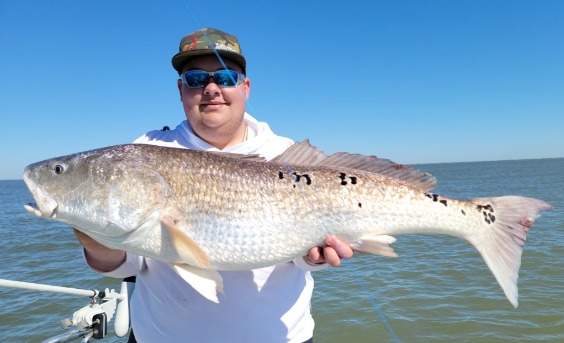
Meet your Captain Trenton St. John
- Experience the best fishing of Galveston Bay!


Summary
Join a fishing charter in Texas City on Saturday, July 18th and experience the thrill of landing Northern Kingfish and Black Drum. Captain Trenton St. John of Get Tight Fishing Charters guides anglers through productive Galveston waters where these prized saltwater species deliver consistent action and memorable moments.
Fishing Charter with Captain Trenton St. John - Rates & Booking
Captain Trenton St. John of Get Tight Fishing Charters operates out of Texas City on Saturday, July 18th, delivering consistent saltwater fishing experiences in the Galveston area. This fishing charter targets Northern Kingfish and Black Drum, two of the region's most sought-after species. Anglers of all skill levels are welcome aboard as the Captain's expertise ensures productive time on the water. Contact Get Tight Fishing Charters to discuss trip options, group size, and availability for your fishing adventure.
Highlights of Your Fishing Charter
The waters around Galveston offer exceptional opportunities to tangle with hard-fighting Northern Kingfish and Black Drum. These species respond well to live bait and conventional tackle, making for an engaging and rewarding day on the water. The area's rich ecosystem and established fishing grounds mean you'll spend your time fishing rather than searching.
Witnessing a fresh catch laid out on the cleaning table represents the culmination of strategy, patience, and angling skill. The quality of your catch reflects both the productivity of local waters and Captain Trenton St. John's knowledge of where and when these fish congregate.
Local Species Insights: Northern Kingfish and Black Drum
The waters surrounding Texas City and Galveston teem with Northern Kingfish and Black Drum, species that define Gulf Coast saltwater fishing. Northern Kingfish are aggressive hunters known for their powerful runs and acrobatic fights. These streamlined predators patrol nearshore and mid-depth zones, responding to live bait presentations and artificial lures. Their presence indicates healthy, productive water conditions where prey species are abundant.
Black Drum, by contrast, are bottom-feeding powerhouses capable of reaching impressive sizes. These bronze-colored fighters are known for their distinctive drum-like sounds produced by specialized muscles, and they fight with dogged determination when hooked. Black Drum thrive in the Galveston Bay complex and nearshore structure, where they forage on crustaceans and mollusks. Encountering multiple Black Drum on a single outing demonstrates the extraordinary abundance of this species in the region.
The environment where these species coexist creates a compelling fishing scenario. The gulf's productive waters, supported by nutrient-rich currents and shallow bays, sustain robust populations of both species. Captain Trenton St. John's choice to focus on this combination reflects years of observing local patterns and understanding where these fish congregate seasonally. The combination of aggressive strikes, strong fighting ability, and table quality makes this pairing ideal for anglers seeking both action and reward.
Understanding the habitat preferences of these species enhances your appreciation of the fishing experience. Northern Kingfish often relate to structure, drop-offs, and areas of current concentration, while Black Drum favor shallow grass flats and rocky bottoms. Both species are attracted to areas rich in baitfish and crustaceans. The Galveston area provides all these elements in abundance, creating conditions where productive fishing consistently occurs.
Your day on the water with Get Tight Fishing Charters puts you directly in contact with these powerful Gulf Coast residents. Watching these fish display their natural behaviors, feeling their strength through your tackle, and appreciating the skill required to land them creates memories that extend far beyond the final catch.
Fishing in Galveston: Northern Kingfish and Black Drum
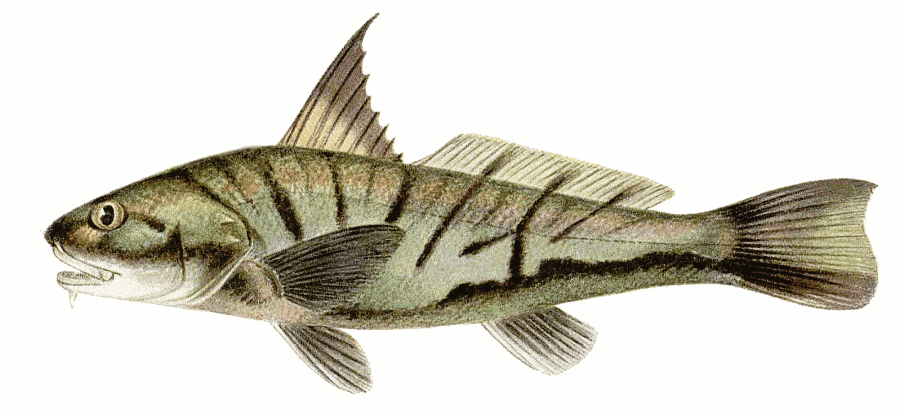
Northern Kingfish Overview
The Northern Kingfish (Menticirrhus saxatilis) is a compact but spirited saltwater gamefish belonging to the drum family, Sciaenidae, within the order Perciformes. Found throughout the Atlantic coastal waters from Maine to Florida, this fish has earned a devoted following among anglers who appreciate its feisty nature and delicious white meat. What makes this species particularly intriguing is that despite being a member of the drum family—known for producing distinctive croaking sounds—the Northern Kingfish remains remarkably silent, making it a unique member of its clan. With its distinctive greenish bronze coloring, dark angular markings, and characteristic single barbel beneath its mouth, this bottom-dwelling fish is as identifiable as it is challenging to catch.
Northern Kingfish Habitat and Distribution
The Northern Kingfish thrives in the shallow coastal waters of the Atlantic seaboard, with its range extending from Maine down through Florida and into the eastern Gulf of Mexico, reaching as far south as the Yucatan Peninsula. These fish are demersal creatures, meaning they prefer spending their time near the seabed, particularly around rocky and sandy bottoms where they can hunt for food. In coastal areas like Florida and throughout New England, you'll typically find them swimming in small schools in the shallower parts of the water column. However, as water temperatures drop during winter months, these adaptable fish migrate to deeper offshore waters to escape the cold. Juveniles are commonly spotted in tidal rivers and creeks, taking advantage of the nutrient-rich nursery grounds before venturing into open coastal waters as they mature. Their ability to tolerate lower salinity levels makes them occasional visitors to brackish estuaries and river mouths during spawning season.
Northern Kingfish Size and Weight
The Northern Kingfish is a rather diminutive species, with most individuals averaging between 10 to 14 inches in length and weighing between half to one and a half pounds. The maximum recorded size tops out at around 18 inches long, though exceptional specimens have reached nearly two feet. The world record catch, interestingly, was landed as a by-catch by commercial gillnet fishers rather than through sport fishing. What this fish lacks in sheer mass, it more than compensates for through speed and aggressive fighting behavior when hooked. Even the smallest Northern Kingfish will put up a surprisingly spirited battle, making them excellent targets for anglers using light tackle who enjoy an active struggle.
Northern Kingfish Diet and Behavior
As a carnivorous bottom feeder, the Northern Kingfish actively hunts small fish, mollusks, worms, crabs, shrimp, and other benthic organisms along the seafloor. The distinctive barbel located beneath its mouth serves a critical sensory function, allowing the fish to feel, taste, and smell its surroundings as it searches for food. When prey is abundant, it feeds actively throughout the day; however, during lean times, the Northern Kingfish will opportunistically scavenge dead animals found on the bottom. These fish are known for their relative quickness and will dart away rapidly when threatened. They exhibit schooling behavior in their natural habitat, often traveling in small groups near or on the seabed. Their aggressive feeding response and combative nature when hooked—despite their modest size—make them rewarding opponents for anglers.
Northern Kingfish Spawning and Seasonal Activity
The spawning season for Northern Kingfish extends from April through August, with peak activity occurring during the warmer summer months. During this period, females release thousands of buoyant eggs contained in oily encasements that allow them to float freely with ocean currents. These eggs hatch within two to three days, producing tadpole-like larvae with disproportionately large heads and tiny bodies. Juveniles reach approximately 11 to 12 inches in length within five to six months and become sexually mature between two to three years of age. The typical lifespan for this species ranges from three to four years, making them relatively short-lived compared to many other gamefish. Late summer represents peak abundance near coastal shores, making this the ideal time for targeting them if you're planning a fishing trip.
Northern Kingfish Techniques for Observation and Capture
Light Tackle Method: When specifically targeting Northern Kingfish, equip yourself with light tackle paired with small hooks—this setup matches their modest size and allows for maximum sensitivity to their bites. Fish onshore from piers, jetties, and along the surf during late summer when they're most abundant near the coast. Cast close to sandy or rocky bottoms where they naturally congregate, and be prepared for quick, aggressive strikes.
Bait Selection Approach: Fresh clams and bloodworms are time-tested baits that consistently attract Northern Kingfish, while small pieces of squid also work effectively. Keep your bait near the bottom where these demersal feeders actively hunt, and maintain steady contact with the seafloor. Around coastal Florida and the Atlantic seaboard, local bait shops can provide fresh offerings suited to current conditions.
Nearshore Boat Fishing: For a more active experience, fish from a boat in nearshore waters close to rocky or sandy bottom structures. Use a sounder to locate promising depth changes and bottom composition, then position your boat up-current to allow bait to drift naturally into feeding zones. Late summer through early fall provides the most productive window for this approach.
Northern Kingfish Culinary and Utilization Notes
The Northern Kingfish has earned a solid reputation for its culinary qualities, featuring delicious white meat that appeals to both casual and experienced seafood enthusiasts. The flesh is lean, mild-flavored, and versatile enough for pan-frying, baking, or incorporating into fish stews and chowders. While individual specimens are modest in size, a good catch provides enough meat for a flavorful meal. The firm texture holds up well during cooking, making it an excellent choice for those new to cooking fresh-caught fish. Many anglers value this species not only for the sporting challenge it provides but also for the quality table fare it delivers, making it a rewarding target both during and after the fishing experience.
Northern Kingfish Frequently Asked Questions
Q: What is the best bait for catching Northern Kingfish?
A: Fresh clams and bloodworms are your most reliable options, with small cut pieces of squid serving as an excellent backup choice. The key is presenting your bait near the bottom where these bottom-feeding fish actively hunt. Many anglers have success using a combination approach, changing baits if one isn't producing strikes after 15-20 minutes.
Q: Where can I find Northern Kingfish near coastal Florida?
A: Throughout Florida's Atlantic coast and into the Gulf of Mexico, look for shallow sandy and rocky bottom areas in nearshore and onshore environments. Piers, jetties, and surf zones are productive, while boat fishermen find success in slightly deeper nearshore waters with good bottom structure. Late summer through early fall represents peak season for abundance near Florida's shores.
Q: Is Northern Kingfish good to eat?
A: Absolutely—Northern Kingfish has earned praise for its excellent white meat and mild, pleasant flavor. The flesh is lean and versatile, working well for pan-frying, baking, or use in seafood preparations. While individual fish are modest in size, a good catch provides enough quality meat for a satisfying meal.
Q: When is the best time to catch Northern Kingfish?
A: Late summer through early fall is peak season, with fish most abundant near coastal shores during this period. However, they remain available throughout warmer months. Water temperature changes during winter trigger migrations to deeper offshore waters, so adjust your fishing locations accordingly based on seasonal patterns.
Q: Why doesn't Northern Kingfish make croaking sounds like other drum family members?
A: This remains one of the species' most intriguing characteristics—despite being a member of the Sciaenidae family known for their distinctive croaking vocalizations, Northern Kingfish remain silent. Scientists believe this may relate to their bottom-feeding habitat and smaller size, but the exact evolutionary reason remains unclear.
Q: How fast do Northern Kingfish grow?
A: Growth is relatively rapid in early years, with juveniles reaching 11-12 inches within five to six months of hatching. Fish become sexually mature between two to three years of age, at which point growth slows. Their relatively short lifespan of three to four years means most individuals spend their mature years in the 10-14 inch range typical for most sport catches.
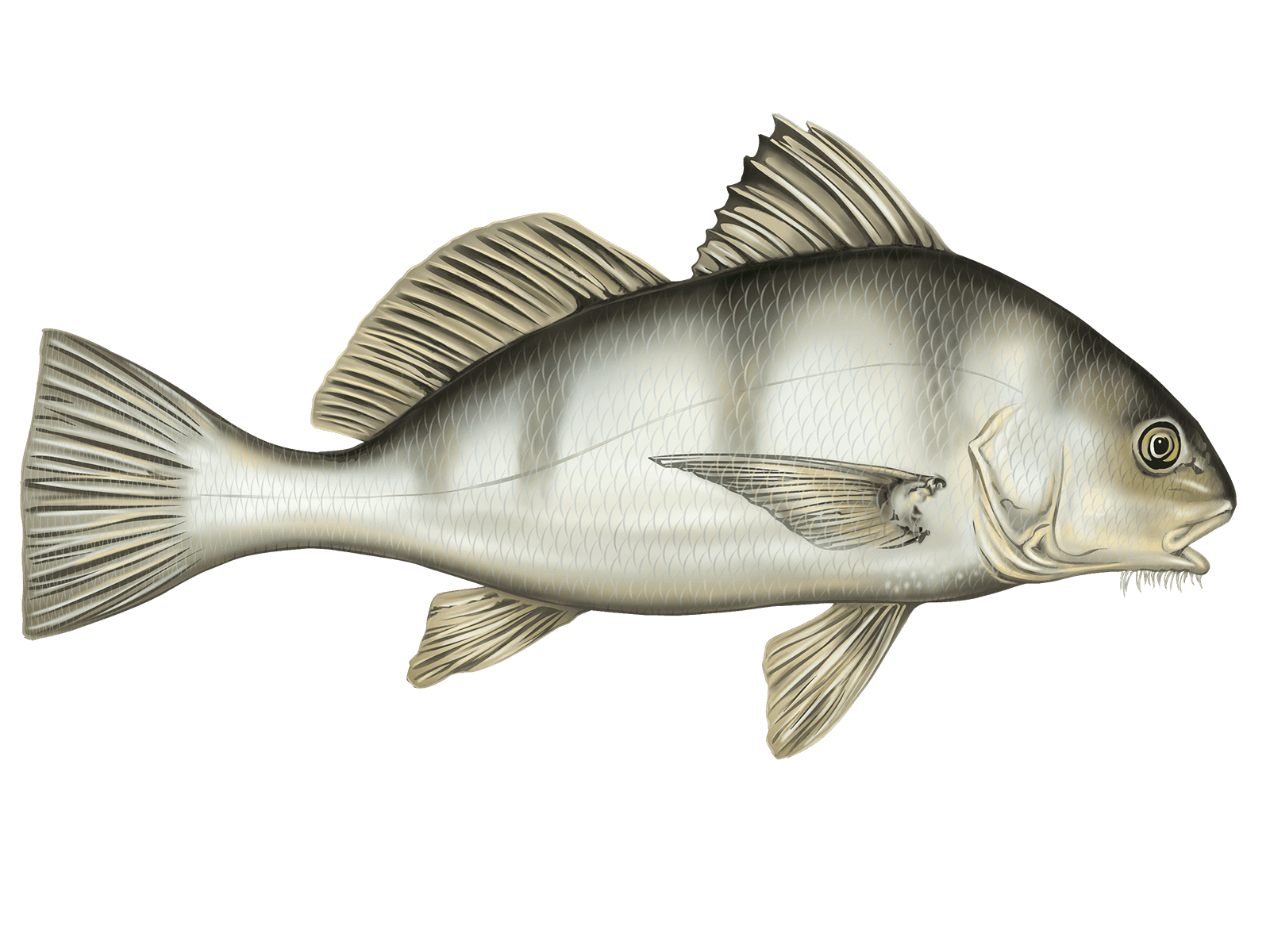
The Black Drum (Pogonias cromis) stands as the giant of the Sciaenidae family, earning its reputation through both impressive size and distinctive acoustic abilities. These remarkable fish get their name from the drumming or croaking sounds they produce, which can reach frequencies of 100 to 500 Hz during spawning season. With their powerful jaws designed for crushing shellfish and oysters, these dark-colored bruisers represent one of the most sought-after inshore game fish along the Atlantic and Gulf coasts, offering anglers both challenging fights and rewarding table fare when properly sized.
Black Drum Overview
What makes these fish truly special is their incredible adaptability and longevity. They're bottom-dwellers that can live up to 50 years, growing rapidly in their first two years and reaching sexual maturity quickly. Their robust build and crushing power make them formidable opponents for anglers, while their preference for brackish waters and estuaries puts them within reach of shore-based fishermen. The drumming sounds they make aren't just for show - they're sophisticated mating calls that help these fish locate each other during spawning aggregations, creating some of the most exciting fishing opportunities of the year.
Black Drum Habitat and Distribution
These adaptable fish have claimed territory from Nova Scotia all the way down to the Gulf of Mexico, thriving in a variety of environments. Adults prefer the saltier waters near ocean inlets and around oyster beds, where their favorite foods are abundant. Juveniles, on the other hand, seek out the less saline areas of estuaries with sandy bottoms, providing natural nursery areas. What's remarkable about these fish is their tolerance for different conditions - you might find them in extremely shallow water one day and at depths of 100 feet the next. They're particularly drawn to muddy flats, pier pilings, and creek mouths where tidal action concentrates their prey.
Black Drum Size and Weight
Size-wise, these fish offer something for everyone, typically ranging from 5 to 30 pounds, though true giants can exceed 90 pounds. The smaller specimens in the 15-pound range are considered prime table fare, while the larger fish are better suited for catch-and-release due to their tougher meat texture and stronger flavor. It's not uncommon to encounter fish in the 20 to 40-pound range during peak season, and these middle-weight bruisers provide excellent sport while still offering decent eating quality for those who know how to prepare them properly.
Black Drum Diet and Behavior
As dedicated bottom-feeders, these fish have developed powerful crushing jaws perfectly suited for their shellfish-heavy diet. Crabs, mussels, clams, and oysters make up the bulk of their meals, though they'll also take marine worms and small fish when the opportunity arises. Their feeding behavior is methodical and deliberate - they use their sensitive barbels to locate prey buried in sand and mud, then employ their impressive jaw strength to crush through shells. During feeding frenzies, particularly around oyster beds, you can sometimes hear the actual crunching sounds they make while feeding, which often gives away their location to observant anglers.
Black Drum Spawning and Seasonal Activity
Spawning season brings out the most exciting behavior in these fish, as they gather in large schools and become much more predictable in their movements. In southern regions like Texas, this typically occurs from February through March, while northern areas see peak activity from April to June. During this time, females can lay eggs every three days, and the males produce their characteristic drumming sounds almost continuously. These spawning aggregations create prime fishing opportunities, as the normally scattered fish concentrate in specific areas and become more aggressive in their feeding. The sound of dozens of drums calling simultaneously creates an underwater symphony that experienced anglers learn to recognize and locate.
Black Drum Techniques for Observation and Capture
Success with these fish comes down to three key factors: location, bait selection, and patience. Live or fresh bait works best - soft-shell crabs, peeler crabs, and fresh clam are top choices, though many anglers swear by blue crab because it doesn't attract as many bait-stealing catfish. Fish your baits right on the bottom using enough weight to hold position in current, and be prepared for a slow, deliberate bite that can easily be mistaken for a snag. For artificial presentations, slow-moving bucktail jigs work well, especially when tipped with natural bait. Fly fishing enthusiasts should opt for 9-weight rods and bottom-bouncing patterns like Clouser Minnows or crab imitations. Around popular fishing areas, look for shallow flats adjacent to deeper water, especially during moving tides when these fish become more active.
Black Drum Culinary and Utilization Notes
When it comes to table fare, size matters significantly with these fish. Specimens under 15 pounds offer mild, flaky white meat that's excellent when prepared fresh, while larger fish develop a coarser texture and stronger flavor that some compare to chicken. The key to good eating is proper handling and quick processing - these fish benefit from bleeding immediately after capture and keeping on ice. Smaller drums work wonderfully in fish tacos, blackened preparations, or simple pan-frying, while larger fish are better suited for stews or heavily seasoned dishes that can mask their stronger flavor. Many experienced anglers practice slot-limit fishing, keeping only mid-sized fish for the table while releasing both the smaller juveniles and the large breeding stock.
Black Drum Frequently Asked Questions
Q: What is the best bait for Black Drum fishing?
A: Live or fresh crab consistently outperforms other baits, particularly soft-shell crabs, peelers, or blue crab halves. Fresh clam and cut mullet also work well, but crab tends to attract fewer bait-stealing species and stays on the hook better in current.
Q: Where can I find Black Drum in coastal areas?
A: Look for oyster beds, shallow muddy flats, pier pilings, and creek mouths in brackish water areas. They prefer areas where fresh and salt water mix, especially spots with good tidal flow that concentrates their food sources.
Q: Are Black Drum good to eat?
A: Fish under 15 pounds are excellent table fare with mild, flaky white meat. Larger specimens become progressively tougher and stronger-flavored, making the smaller to medium-sized fish the best choice for eating.
Q: When is the best time to catch Black Drum?
A: Spring spawning season offers the most consistent action when fish school up in predictable areas. Early morning and late afternoon during moving tides typically produce the best results, though they can be caught year-round in most areas.
Q: What tackle should I use for Black Drum fishing?
A: Medium to heavy spinning or conventional tackle works best, with 20-30 pound test line and strong circle hooks. Use enough sinker weight to keep your bait on the bottom, and be prepared for long, powerful runs when you hook a large fish.
Q: How can I tell if I'm in good Black Drum water?
A: Look for areas with oyster beds, muddy bottoms, and good tidal flow in brackish water. During spawning season, you might actually hear the drumming sounds they make, which is a dead giveaway that fish are present and active.